Bojna pošta hrvatskih vojnika u prvom i drugom svjetskom ratu je gotovo posve neobrađena tema.Nažalost i danas je na marginama filatelističkih zbivanja. U blogu ću objaviti svoje tekstove i popise bojnih pošta iz oba rata. Slobodno možete koristiti materijale i slike sa bloga, ali ako ih objavite navedite izvor-ovaj blog. ENG: This blog is about fieldpost of Croatian soldiers in WWI and WWII.Feel free to use data and pics from this site, but if you publish them name their source,this blog
Sunday, 25 October 2026
02.1944 Kroat.Ausbidungs brigade to Zagreb, chemical censorship
05.02.1944 feldpost letter to Zagreb from Fp.57364 B used by 9.company, III.batallion of Kroatische Ausbildungs Brigade based in Hollabrun,Austria. Feldpost and censors cancels are present, at the back is visible line of chemical censorship. Cover only without content.
Saturday, 31 August 2024
1.1943 - 106.Infanterie-Division of Wehrmacht to Osijek, Croatia.
15.01.1943 Feldpost letter from Fp.05130 D to Osijek Croatia. Fp.05130D was used by 3. Kompanie, I.Bataillon, Grenadier Regiment 239 of 106.Infanterie-Division. 106.Infantry division was withdrawn from the Eastern front in May 1942 and relocated to France for replenishment in the St. Omer, Calais, Boulogne-sur-Mer area, on the La Manche coast . In February 1943, it returned to the Eastern Front in the Kharkov area.
This letter was mailed by Croatian Volksdeutsche soldier to home in Osijek, Croatia, just before transfer from France back to Russian front. Text is in German. Regular german censorship marks are both on the cover and the letter sheet, also on both pieces are present blue marks of chemical censorship. Arrival cancel Osijek 26.01. is on the backside.
Sunday, 9 April 2023
09.12.1942. Croatian Legion(369.Inf.Rgt) in Stalingrad to Croatia
09.12.1942 feldpost letter from Stalingrad to Zagreb Croatia. Sadly feldpost cancel was cut out by someone most probably because there was a Luftfeldpost stamp. Units feldpost cancel with Fp.46511 is clearly visible, it was used by Stab u. 1.-4. Batterie leichte Kroatische Artillerie Abteilung of 369.Kroat.Inf.Rgt. (Croatian Legion). Sender is Obergefreiter A.Jurković from Fp.46511B - 1st. Battery of Artillerie Abteilung.
Letters content has very interesting message.
Anton Jurković writes that he returned to the unit sometime before, that he was promoted and decorated with a medal. He doesnt writes that German and Croatian forces were surrounded by Bolshevik forces at the time in Stalingrad, but he notes that he mailed a (Luftfeldpost) stamp to adresse that he can used it for mail. He writes: "there is bitter fighting here, but we hope for the best..."
Small piece of letter where a place of writing was stated was cut out by censors, ordinary censorship as well as chemical censorship was carried out by German censors and noted by censors tape and multiple cancels.
Anton Jurković is mentioned as recipient of military decoration in book Hrvatska Legija, the best book about 369. Croatian Infantry Regiment.
Sunday, 15 August 2021
10.1943 Kroat.Ausbildungs Brigade to Zemun,NDH - Chemical censorship
27.10.1943 card from Fp.57364F - 3.Ausbildungs Battalion of Kroatische Ausbildungs Brigade in Stockerau to Zemun, Croatia. Chemical censorship lines are visible. Text is usual greetings and reports, sender notes that he is serving with bicycle unit and writes that other lads from Zemun are training in Neusiedl (am See) with Fp.56925C - 4.Ausbildungs Battalion of Kroatische Ausbildungs Brigade.
Friday, 14 May 2021
2.1944 Kroat.Ausbildungs Brigade Fp.57364 Chemical censorship.
2.1944 letter from Kroatische Ausbildungs brigade to Zemun NDH . Mailed from Fp.57364 F - III.Ausbildungs Bataillon, 6.kompanie. Chemical chensorships blue line is visible. Chemical censorship on mail from Kroat.Ausbildung brigade is rare.
Monday, 9 November 2020
392. Kroatische Infanterie Division - Fp.06692 , Chemical censorship
16.11.1943 card from Fp.06692 E , 8.company. II.Battalion, 846 Regimente, 392. Inf. Kroat.division. to Podravske Sesvete, Croatia. OKW censorship.
At the back of the cover blue line of german chemical censorship, which is rare on feldpost to Croatia.
Saturday, 7 November 2020
Kroatische Ausbildungs Brigade - Reserve lazarett Hollabrunn - Fp.57364
28.06.1943 letter to Podravske Sesvete , Croatia from Kroatische Ausbildungs Brigade. Sender writes his adress as Fp.57364 E which is 4.company III.Ausbildungs Bataillon Kroat. Ausb-Brigade that was located in Hollabrunn. Letter was mailed from hospital - cancel Reserve Lazarett Hollabrunn, in text soldiers writes that he is ill and is in a hospital.
With usual Censor marks present on the cover and on the text page , chemical censorship marks are present as blue lines at back of the cover and across the text. Such letters with chemical censorship marks mailed from Kroat.Ausbildungs Brigade are very rare.
Friday, 24 January 2020
Chemical cenzorship pics
1944.(exact date unreadable) Cover of a letter sent from Krapina, NDH to Fp 56925E: 4.Kompanie, IV.Ausbildungs-Bataillon , Kroatische Ausbildungs Brigade. Chemical censorship lines visible on the back of the cover.
06.09.1943 folded official German issued letter-sheet ,sent from Fp.59875 Stab u. Einheit gemischte Ausbildungs-Abteilung, Kroatische Ausbildungs Brigade to Zagreb NDH.
On the front and back of cover are visible pale and blue line of chemical censorship. When letter unfolds chemical censorship lines are even better visible on the both sides of paper.
Thursday, 2 January 2020
Chemical cenzorship
Chemical censorship was fully developed during WWI, when mail circulated between warring sides via Netherlands and Switzerland. During both wars people tried to send secret messages to the opposing side written in invisible ink. Ordinary materials like: milk , urine , starch solution or citrus fruits juices were used as well as specially developed invisible inks made by military and intelligence agencies. During WWI Germans used invisible ink such as lead-acetate hidden in toilet water and soap made from potassium ferrocyanide but they were discovered by the french scientists using electrolysis with silver nitrate or were detected with solutions of silver , like solution Protargol( silver proteinate). As French developed a way to detect German invisible inks they developed their own invisible inks , one of them needing 4 developing reagents in set order, and it was so successful that it has not been made public yet , over a 100 years later.
In 1941 Germans spies caught in USA and Bermuda used diluted solution of Pyramidon (Aminophenazone) which was antipyretic readily available in any Pharmacy and is still in market today. In wasnt detected using modern kits of the time but by using old fashion iodine solution.
Such readily available but hard to detect compounds were best candidates for invisible inks.
In my opinion on letters from Kroatian Ausbildungs brigade mailed to Croatia German censors were looking for simple ordinary materials and not for special inks.
On letters, often blue lines of various intensity are visible which are most probably from diluted solutions of copper sulphate , also much more pale lines can be seen possibly from diluted iodine solutions.
Mail with chemical censorship sent to and from Croatia during WW2 is rare.
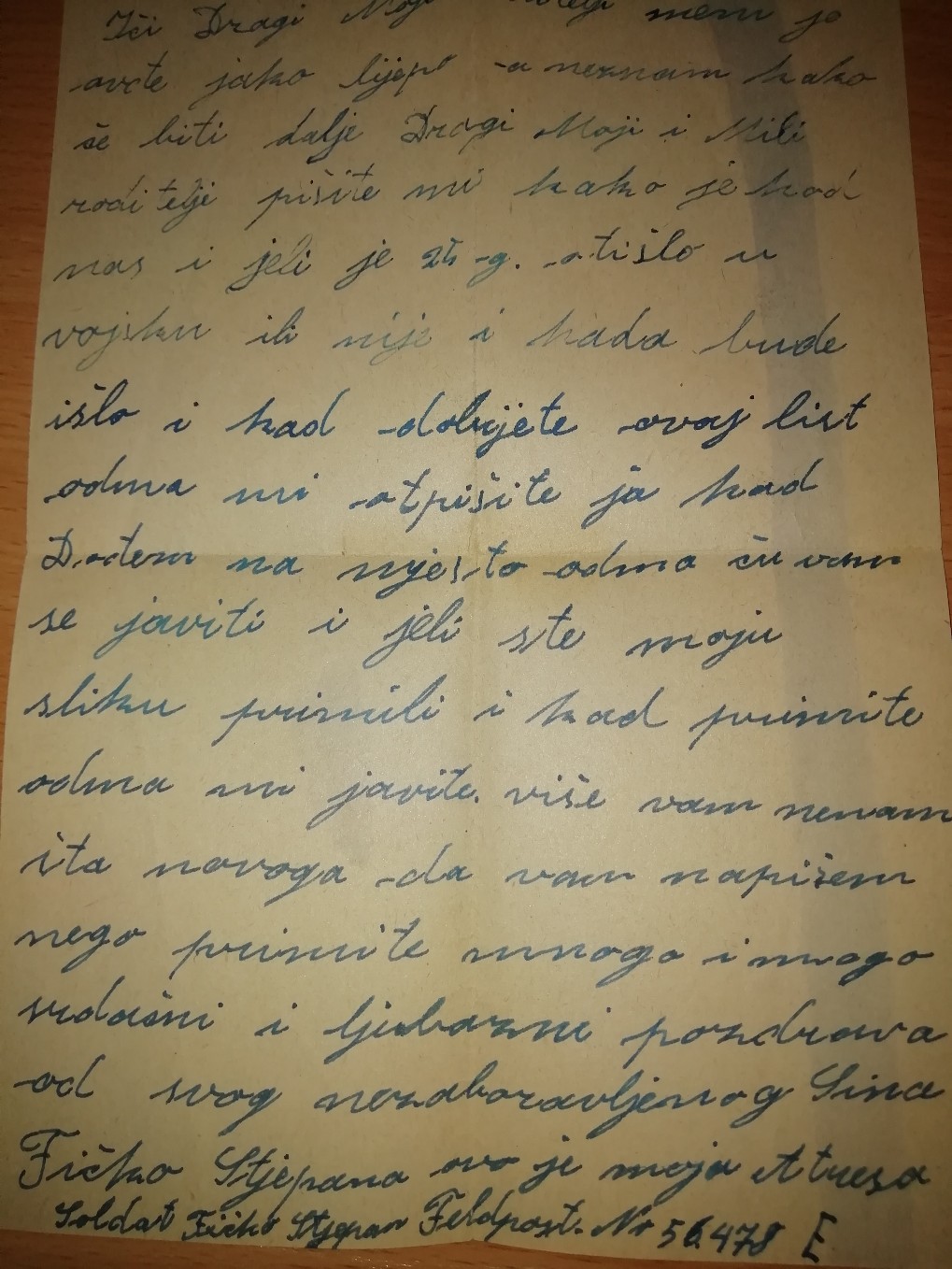
Registered Letter sent from Stockerau-Lager 8.1943 to Podravske Sesvete ,Croatia. Blue lines of censors solution are visible on the cover and on the page of text . Often stamps were removed by censor to check for hidden message on the back of the stamps. All mail from Stockerau Lager to Croatia was censored ,but registered mail was rare as Feldpost cards were mailed for free unlike registered mail. German censors applied regularly same censor number on the envelope and on the sheet of text , here we can see number 565671 on the top and bottom picture.
Cover of a registered letter mailed 5.1944 to Osijek ,Croatia from Stockerau Lager
Blue line of censors solution is visible on the back of the cover and on the edge.
German stamp was not removed which is exception to the rule. Nice Ag censor mark , means it was censored in Wien ( Vienna)
Registered mail from Stockerau Lager to Croatia is rare .